How I Tamed My Cash Flow — Smart Product Picks That Actually Work
What if the key to better money days isn’t earning more, but managing what you already have? I used to live paycheck to paycheck, constantly stressed about where my cash was going. Then I shifted my focus from income to flow—and everything changed. It wasn’t a magic app or a wild investment. It started with choosing the right financial products. Here’s how I found the tools that finally made my money work for me—without the hype or risk.
The Cash Flow Wake-Up Call
For years, I believed I had a budgeting problem. I tracked every coffee, compared grocery prices, and swore off impulse buys. Yet, despite a steady job and responsible habits, I still felt financially fragile. One winter, my car broke down unexpectedly. The repair bill was just under $600—far from catastrophic, yet it threw me into panic. I didn’t have that amount readily available. I scrambled to cover it with a high-interest credit card, adding stress on top of expense. That moment was my wake-up call: the issue wasn’t how much I earned or spent. It was how my money moved—or rather, how it didn’t.
Cash flow isn’t just a term for businesses or investors. It’s the rhythm of money coming in and going out of your personal life. When inflows and outflows are out of sync, even a healthy salary can’t prevent financial strain. I began to see that my money wasn’t working for me—it was stuck in the wrong places at the wrong times. I had savings, but they were inaccessible when needed. I had credit, but it came with traps. My accounts charged fees that quietly eroded balances. I wasn’t managing my financial ecosystem; I was reacting to emergencies.
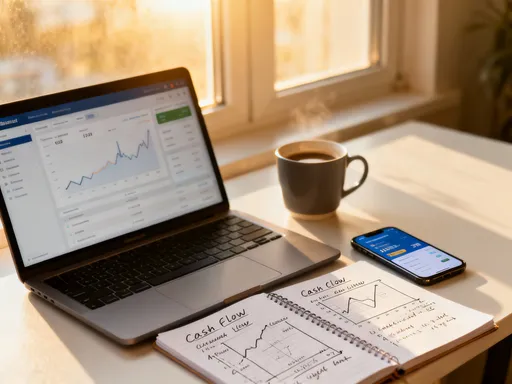
So I started mapping my cash flow. I listed every source of income, every recurring bill, and every variable expense. I categorized them by timing: what came in when, what went out when, and how much buffer existed between them. The results were eye-opening. I discovered that small, recurring fees—monthly maintenance charges, ATM costs, subscription overlaps—were collectively costing me over $100 a month. My emergency fund was sitting in a traditional savings account with a 0.01% interest rate and a 48-hour transfer delay. My credit card due dates were clustered at the end of the month, right when my checking account was at its lowest. These weren’t flaws in my discipline—they were flaws in my system.
This realization changed everything. I stopped blaming myself for overspending and started asking better questions: Why was my money idle when it could be earning? Why were my tools making life harder instead of easier? I began to understand that financial health isn’t just about willpower. It’s about structure. And structure begins with the financial products you choose. The right ones can create space, reduce friction, and give you control. The wrong ones can drain you slowly, without you even noticing. My journey to financial stability didn’t start with earning more. It started with choosing better tools.
Why Product Choice Makes or Breaks Your Flow
Many people assume that financial products are interchangeable—just different brands offering the same thing. But in reality, small differences in terms, access, and design can have a massive impact on your daily financial experience. A checking account with a $12 monthly fee might seem minor, but over ten years, that’s $1,440 lost—money that could have been earning interest or covering real needs. A credit card with a 21-day grace period instead of 25 gives you less time to pay without interest, increasing the risk of carrying a balance. These aren’t trivial details. They’re the difference between smooth flow and constant friction.
I learned this the hard way. I once opened a high-yield savings account because of its advertised interest rate. But I didn’t read the fine print: withdrawals were limited to six per month, and transfers took three business days. When an urgent home repair came up, I couldn’t access my own money quickly enough. I ended up using a credit card with a 24% APR, wiping out months of interest gains in a single transaction. The product wasn’t bad—it was just wrong for my needs. I had prioritized return over usability, and it cost me.
Every financial product serves a function in your personal economy. Checking accounts are your transaction hubs. Savings accounts are your reservoirs. Credit cards are timing tools. Loans are long-term commitments. When you choose them, you’re not just picking a bank or a card—you’re designing a system. The best products act like well-placed valves, allowing money to move where it’s needed, when it’s needed. The worst ones act like clogs, slowing everything down or trapping funds where they can’t help you.
So I started evaluating products based on three key criteria: liquidity, timing, and cost. Liquidity means how quickly and easily I can access my money. Timing refers to how well the product aligns with my income and expense cycles. Cost includes not just fees and interest, but also opportunity cost—what I’m giving up by using one tool over another. I stopped chasing flashy rewards or high advertised rates. Instead, I looked for reliability, simplicity, and alignment with my real-life rhythm. This shift in mindset—from passive user to intentional designer—was the turning point in my financial journey.
Building a Cash-Flow-Friendly Banking Setup
My old banking relationship was rooted in convenience, not strategy. I used a national brick-and-mortar bank because it was where I opened my first account as a teenager. It had branches nearby, so I assumed it was the right choice. But over time, I realized it was working against me. Monthly maintenance fees, $3 ATM charges, and slow online transfers added up. Transferring money between my checking and savings took two business days—too slow when I needed to cover a bill. I was paying for access I rarely used and sacrificing efficiency I desperately needed.
I decided to rebuild my banking setup from the ground up. I moved my primary spending account to a no-fee online bank. It offered unlimited ATM reimbursements, instant mobile deposits, and free peer-to-peer payments. No branches, but I didn’t need them. What I gained was speed, transparency, and zero fees. I linked it to a high-yield savings account at the same institution, allowing for seamless transfers. I set up an automatic nightly sweep: any balance over $500 in my checking account would move to savings. This ensured I wasn’t leaving money idle, earning nothing, while still keeping enough in checking to cover daily expenses.
To add another layer of control, I opened a second checking account—this one with a slightly different purpose. I used it to pre-fund irregular expenses: car insurance, property taxes, holiday gifts. Each payday, I transferred a small, calculated amount into this account based on annual costs. When the bill came due, the money was already there, eliminating last-minute scrambles. This simple separation of functions—daily spending, emergency buffer, and irregular expenses—created mental and financial clarity.
The most powerful change was timing. I aligned my direct deposit with my bill due dates. I used calendar alerts to track upcoming obligations and ensured my accounts were funded at least three days in advance. I also took advantage of banks that offer early direct deposit, getting my paycheck up to two days sooner. That extra time made a surprising difference—enough to cover a utility bill before a late fee kicked in, or to transfer money to savings before a spending temptation arose. My new banking system wasn’t flashy, but it was functional. It gave me breathing room, reduced stress, and put me back in control.
Credit Tools That Help—Not Hurt—Your Flow
Like many people, I used to see credit cards as dangerous—something to avoid unless absolutely necessary. I carried one with a low limit, used it only for emergencies, and paid it off immediately. But over time, I realized I was missing an opportunity. Credit, when used intentionally, isn’t a debt trap. It’s a cash flow tool. It gives you control over timing. It allows you to smooth out irregular expenses. It can even protect you from fraud and provide valuable perks—all without costing you a cent, as long as you pay in full.
I started looking for a credit card that served my needs, not the bank’s marketing goals. I avoided rewards cards that encouraged overspending. Instead, I chose one with a long grace period—25 days from statement close to payment due. This gave me up to 50 days of interest-free use, depending on when I made purchases. I aligned the statement closing date with my payday, so I always had funds available when the bill came due. I set up automatic payments for the full balance, ensuring I never missed a due date.
The psychological shift was significant. I stopped fearing my credit card and started using it strategically. I paid for groceries, gas, and subscriptions with it—not to rack up points, but to extend my cash flow window. The money stayed in my savings account longer, earning interest, while I had the convenience of spending. When the bill came due, I paid it in full from checking, with no interest charged. I was using the bank’s money, not borrowing mine.
I also valued non-monetary benefits. My card includes purchase protection, extended warranties, and travel insurance—features that have saved me hundreds in unexpected situations. When a laptop I bought was damaged in transit, the card’s protection covered the full cost. When a flight was canceled, the travel insurance provided a rental car. These aren’t gimmicks; they’re real financial safeguards. By choosing a card that offered utility over rewards, I gained peace of mind without adding risk. Credit, when used with discipline, isn’t a liability. It’s a tool that enhances your financial resilience.
The Hidden Power of Debt Structure
Debt often gets a bad reputation, but not all debt is created equal. What matters isn’t just the interest rate—it’s the structure. I had two personal loans: one with a 6% interest rate but fixed monthly payments and no flexibility, and another at 7.5% with an option to skip a payment once a year. At first glance, the lower rate seemed better. But when I lost a few freelance gigs during a slow season, I realized the rigid loan would force me to choose between making the payment or covering rent. The slightly more expensive loan, however, allowed me to pause a payment without penalty, giving me room to recover.
This experience taught me that financial flexibility is a form of risk management. A lower rate is only beneficial if you can reliably make the payments. If a job loss, medical issue, or family emergency disrupts your income, a rigid debt structure can turn manageable debt into a crisis. I refinanced the inflexible loan into one with income-based repayment options. The rate was 6.8%, slightly higher than before, but the ability to adjust payments based on my current income made it worth it. I was no longer living in fear of a missed payment.
I also restructured my credit card debt. Instead of carrying balances across multiple cards with different rates, I consolidated them into a single balance transfer card with a 0% introductory APR for 18 months. This gave me a clear payoff timeline and eliminated the complexity of managing multiple due dates and minimum payments. I created a repayment plan that would clear the balance before the promotional period ended, avoiding any interest. This wasn’t about avoiding debt—it was about organizing it in a way that served my cash flow.
The lesson? Debt isn’t inherently bad. Poorly structured debt is. When choosing a loan or credit product, I now prioritize terms over rates. Can I modify payments if needed? Is there a prepayment penalty? How transparent are the terms? These questions matter more than a fraction of a percent in interest. A well-structured debt product gives you control. It adapts to life’s unpredictability. It supports your cash flow instead of disrupting it.
Emergency Buffers That Actually Work
I used to think I had an emergency fund. I had $3,000 in a savings account labeled “Emergency.” But when I needed it, I realized it wasn’t truly accessible. Transfers took two to three business days. I couldn’t use it directly for payments. I had to wait for the money to land in my checking account before I could act. In a real emergency, that delay was unacceptable. I learned that an emergency fund isn’t just about how much you have—it’s about how quickly you can use it.
I restructured my emergency savings into a tiered system. The first tier is a cash management account linked to my debit card. It holds one month of living expenses and allows instant transfers and direct spending. This is for true emergencies: a broken appliance, a medical copay, a last-minute flight for a family issue. The money is liquid, available 24/7, and protected by FDIC insurance. It earns a modest interest rate, but the priority is access, not return.
The second tier is a high-yield savings account with a slightly longer transfer time—about one business day. It holds two to three months of expenses and serves as a short-term cushion. I use it for larger but predictable costs: car maintenance, home repairs, insurance deductibles. It earns a higher interest rate, so my money works harder while still being relatively accessible.
The third tier is a long-term reserve in a diversified portfolio of low-cost index funds. This isn’t for emergencies—it’s for financial resilience over time. It grows slowly but steadily, protected from inflation. I don’t touch it unless facing a major life event, like job loss or medical leave. This layered approach ensures I always have the right amount of money, in the right place, at the right time. My emergency fund is no longer a static number. It’s a dynamic part of my cash flow system.
Putting It All Together—A Flow-First Mindset
What changed my financial life wasn’t a windfall or a risky investment. It was a shift in perspective. I stopped chasing higher returns and started focusing on better movement. I stopped seeing financial products as isolated tools and started viewing them as parts of a connected system. When each product is chosen with intention—based on liquidity, timing, and cost—the entire system becomes more resilient.
I now review my financial setup every quarter. I ask: Is this account still fee-free? Is my credit card still the best fit? Are my emergency funds accessible enough? I don’t do this to optimize for maximum returns. I do it to ensure my system still aligns with my life. Needs change. Incomes shift. Expenses evolve. A system that worked last year might not work today.
The real win isn’t having more money. It’s having control. It’s knowing that when something unexpected happens, I have the tools to respond without panic. It’s the peace of mind that comes from knowing my money is moving with purpose, not just reacting to shortages. I no longer live paycheck to paycheck. I live in flow.
Financial stability isn’t about perfection. It’s about intention. It’s about choosing products that serve you, not the other way around. It’s about designing a system where money works quietly in the background, giving you the freedom to focus on what really matters—your family, your health, your peace of mind. That’s the power of cash flow done right.