Breathe Into It: How Qigong Quietly Changed My Mind
Stress creeps in quietly—racing thoughts, tight shoulders, sleepless nights. I didn’t realize how unbalanced I’d become until I tried qigong. This ancient practice isn’t about intense movement or quick fixes. It’s subtle, like learning to listen to your body again. Over weeks, I noticed something real: fewer mental spirals, more calm presence. If your mind feels overloaded, what if the solution wasn’t doing more—but moving, breathing, being differently? In a world that glorifies speed and productivity, qigong offers a quiet rebellion: the power of slowness, awareness, and return.
The Breaking Point: When My Mind Felt Like a Browser With 100 Tabs Open
There was no single crisis, no dramatic event—just a slow accumulation of mental noise. Each morning began with a mental checklist that never seemed to end. Emails, appointments, household tasks, family needs—each demand layered upon the last, until my mind felt like a browser with dozens of tabs open, all playing videos, none ever closed. Concentration became a struggle. I’d read the same sentence three times and still not absorb its meaning. Simple decisions, like what to make for dinner, felt exhausting. The weight wasn’t physical, but emotional and cognitive—a constant hum of low-grade anxiety that never quite turned off.
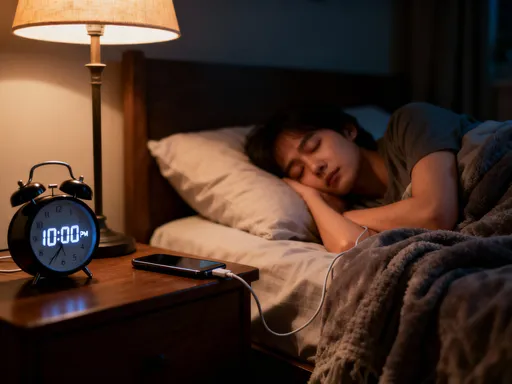
Emotional numbness followed. Moments that should have brought joy—laughing with a child, sharing a meal with a loved one—felt distant, as if I were watching them through fogged glass. Irritability grew sharper. A delayed response to a text, a misplaced item, a sudden noise—small things sparked disproportionate frustration. I wasn’t angry at the world so much as at the feeling of being perpetually overwhelmed, of never quite catching up. Sleep, once a refuge, became another battleground. Lying in bed, my body still but my mind racing, I’d replay conversations from the day or worry about tomorrow’s unfinished tasks. The harder I tried to relax, the more elusive calm became.
It was during one such sleepless night that I admitted something had to change. I had already tried common solutions—medication offered temporary relief but dulled more than it soothed. Talk therapy helped me understand my patterns, but didn’t quiet the constant internal chatter. I needed something that addressed not just the mind, but the body’s stored tension. I wasn’t looking for a dramatic transformation, but a gentle reset. That’s when I first heard about qigong—not as a cure, but as a way to restore balance from within.
Discovering Qigong: Not Just Movement, But Reconnection
Qigong, pronounced “chee-gong,” is an ancient system of coordinated body posture, movement, and breath regulation. Rooted in traditional Chinese medicine, it has been practiced for thousands of years to cultivate and balance qi, the vital life force believed to flow through all living things. Unlike high-intensity workouts or performance-based exercise, qigong is not about strength, speed, or competition. It’s about awareness, rhythm, and integration. The movements are slow, deliberate, and often repeated, designed to calm the nervous system and bring attention back to the present moment.
When I first watched a qigong demonstration, I admit I was skeptical. The motions looked almost too simple—gentle arm raises, shifts in weight, soft steps. There was no music, no instructor shouting encouragement. Just quiet, flowing motion. I wondered: could something so subtle really make a difference? But that simplicity, I soon learned, was its strength. Qigong isn’t about pushing the body to its limits. It’s about listening to it. It’s about relearning the signals we’ve ignored for years—tight shoulders, shallow breathing, a clenched jaw—all signs of a nervous system stuck in overdrive.
One of the most important realizations was that qigong is not martial arts, though it shares roots with practices like tai chi. It’s not yoga, though it shares a focus on breath and body awareness. It’s not performance-based, meaning there’s no goal of perfect form or visible results. The aim is not to impress, but to attune. Each movement is an invitation to slow down, to feel the weight of your feet on the floor, the rise and fall of your breath, the subtle shift of energy within. In this way, qigong becomes less of an exercise and more of a conversation with yourself—a way to rebuild the connection between mind and body that modern life often fractures.
Why It Works: The Science Behind the Stillness
While qigong has ancient roots, modern science is increasingly validating its benefits. At the core of its effectiveness is the regulation of the autonomic nervous system—the part of our body that controls involuntary functions like heart rate, digestion, and stress response. When we’re under chronic stress, the sympathetic nervous system—the “fight or flight” response—becomes overactive. Qigong, through its emphasis on slow, rhythmic breathing and gentle movement, activates the parasympathetic nervous system—the “rest and digest” mode—helping the body shift from a state of alertness to one of calm.
Studies have shown that regular qigong practice can significantly reduce levels of cortisol, the primary stress hormone. In one 2013 meta-analysis published in the Journal of Psychosomatic Research, researchers reviewed multiple clinical trials and found consistent evidence that qigong improves mood, reduces anxiety, and enhances overall psychological well-being. Another study from the University of California found that participants who practiced qigong for eight weeks reported better sleep quality and reduced fatigue compared to control groups. These changes weren’t dramatic overnight, but gradual and sustainable—exactly what someone with chronic stress needs.
The mind-body feedback loop is another key mechanism. When we change our posture—standing tall, shoulders relaxed, chest open—our brain receives signals that we are safe, grounded, and in control. Similarly, slow abdominal breathing sends a message to the brain that there is no immediate threat. Over time, these physical signals can reshape habitual mental patterns. Instead of reacting to stress with panic or withdrawal, the nervous system learns to respond with greater resilience. This isn’t just psychological—it’s physiological. Qigong doesn’t erase stress, but it changes how the body processes it, creating a buffer between external pressure and internal reaction.
My First Move: The Standing Like a Tree Practice That Grounded Me
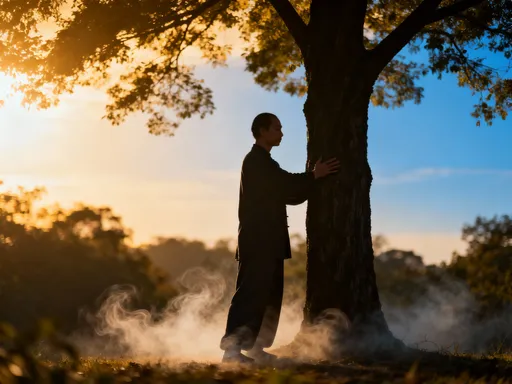
My first formal qigong practice was deceptively simple: Zhan Zhuang, or “Standing Like a Tree.” I was instructed to stand with my feet shoulder-width apart, knees slightly bent, arms rounded in front of me as if gently hugging a large tree. My weight was evenly distributed, my spine tall, my breath slow and deep. That was it. No music, no movement, no goal. Just standing. I thought it would be easy. After two minutes, I was fidgeting. After five, my legs ached, my mind raced, and I questioned the point of it all.
But I kept returning. Each day, I stood a little longer. I learned to soften my knees, relax my shoulders, and let my breath settle into a natural rhythm. The discomfort didn’t vanish, but I began to notice something else: a growing sense of presence. The initial restlessness gave way to moments of stillness. I started to feel the subtle weight of my body, the coolness of the air on my skin, the quiet hum of my breath. It wasn’t excitement or joy—just a deep, quiet awareness of being here, now.
Over weeks, the psychological benefits became clear. I noticed I was less reactive. When a stressful email arrived, I didn’t immediately tense up. I could pause, take a breath, and respond rather than react. Emotionally, I felt more stable. The sharp edges of anxiety softened. I wasn’t immune to life’s challenges, but I felt more grounded, as if I had an internal anchor. Zhan Zhuang taught me that stillness isn’t passive—it’s an active form of presence. By learning to stand quietly, I was retraining my nervous system to return to balance, one breath at a time.
Breathing Is Rewiring: How 5 Minutes a Day Shifted My Anxiety Patterns
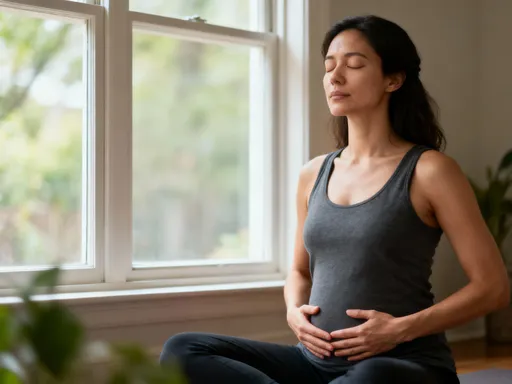
If Zhan Zhuang was my foundation, then breathwork became my daily tool. I began practicing abdominal breathing—inhaling slowly through the nose, allowing the belly to expand, then exhaling gently through the mouth, feeling the abdomen soften. The technique was simple: a count of four on the inhale, a count of six on the exhale. The longer exhale is key—it signals the vagus nerve to activate the parasympathetic system, slowing the heart rate and calming the mind.
At first, five minutes felt like an eternity. My mind wandered constantly. I’d catch myself planning dinner, replaying an awkward conversation, or worrying about an upcoming deadline. But instead of judging myself, I gently brought my attention back to the breath. Over time, the mental chatter didn’t disappear, but it lost its grip. I began to notice a space between a trigger and my reaction—a pause where once there had been only impulse. When anxiety flared, I didn’t spiral immediately. I could name it: “This is anxiety.” And then I could breathe into it.
The real shift came when I started integrating breathwork into daily routines. While waiting for the kettle to boil, I’d take three deep breaths. Before checking my phone in the morning, I’d pause and inhale slowly. At bedtime, I’d lie still and practice the same rhythm, letting the day unwind with each exhale. These micro-moments added up. I wasn’t carving out hours for self-care—I was weaving calm into the fabric of my day. The practice didn’t eliminate stress, but it changed my relationship with it. Anxiety was no longer an enemy to fight, but a signal to pause, breathe, and return to center.
Making It Stick: Simple Ways to Weave Qigong Into a Busy Life
One of the biggest obstacles to any new practice is consistency. When life is full—work, family, household demands—finding time for self-care can feel impossible. I learned early that waiting for the “perfect moment” meant never starting. Instead, I focused on integration. I didn’t need 30 minutes of silence. I needed three. I began with micro-practices: a minute of standing still before leaving the house, a few rounds of abdominal breathing while folding laundry, a slow, mindful walk around the block after dinner.
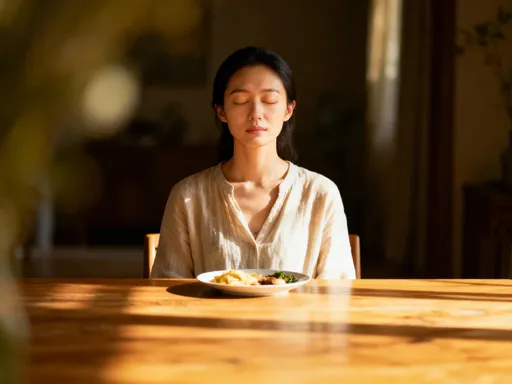
Walking qigong became a favorite. Instead of rushing from one place to another, I’d slow my pace, feel my feet touching the ground, and coordinate my breath with my steps—inhale for three steps, exhale for four. It wasn’t exercise in the traditional sense, but it grounded me. During work breaks, I’d close my eyes and do a quick “body scan,” releasing tension from my jaw, shoulders, and hands. These moments were brief, but cumulative. They reminded me that qigong wasn’t something I did apart from life—it was a way of being within it.
Common challenges arose. Some days, I felt too tired. Others, too skeptical. I learned to adjust. On tough days, I shortened the practice. If standing felt hard, I sat. If I couldn’t focus, I simply listened to my breath without trying to change it. The goal wasn’t perfection, but presence. I also let go of the idea that I had to “feel something” every time. Some sessions were uneventful—and that was okay. The practice worked in the background, like a quiet maintenance system for the nervous system. Over time, consistency mattered more than duration. Daily short sessions built a foundation of calm that long, infrequent ones couldn’t match.
Beyond Calm: The Unexpected Gifts of a Qigong Practice
While reduced anxiety was the initial draw, qigong offered other, unexpected benefits. My focus improved. Tasks that once required immense effort became more manageable. I found I could stay with a project longer, listen more deeply in conversations, and remember small details more easily. Sleep, once fragmented, became more restful. I fell asleep faster and woke feeling more refreshed. My body awareness deepened—I noticed tension earlier, could release it before it built into pain.
Perhaps the most profound shift was in my sense of resilience. Life didn’t become easier—challenges still came. But my internal response changed. I wasn’t knocked over by every wave. I could feel the storm, but I also felt the calm beneath it. This wasn’t about suppressing emotions, but about creating space to experience them without being consumed. I began to see qigong not as an escape, but as a return—to myself, to my body, to the present moment. It became less of a practice and more of a way of living.
Over time, I realized that qigong wasn’t about achieving a particular state of peace. It was about cultivating the ability to return, again and again, to balance. It taught me that mental clarity isn’t found in busyness, but in stillness. That strength isn’t always loud—sometimes, it’s the quiet act of standing still when everything else is moving. These gifts weren’t dramatic, but they were lasting. They didn’t require a retreat or a radical life change. They grew from small, daily acts of attention.
Returning to Yourself, One Breath at a Time
Psychological balance doesn’t require drastic measures. It doesn’t demand hours of meditation or expensive therapies. Sometimes, it begins with something as simple as standing still, or breathing a little deeper. Qigong offers a gentle, accessible path for those carrying the weight of modern life—a way to slow down without falling behind, to care for the mind by caring for the body. It doesn’t promise to erase stress, but to change how we carry it.
In a culture that values doing over being, qigong is a quiet act of resistance. It reminds us that we are not machines, but living systems that thrive on rhythm, rest, and connection. It asks only that we show up, as we are, and breathe. The shifts are subtle at first—a little more patience, a little less reactivity, a moment of stillness in a busy day. But over time, these small changes accumulate into something profound: a deeper sense of self, a quieter mind, a more grounded life.
This isn’t a cure. It’s a practice. And like any practice, it grows with time, patience, and repetition. You don’t need special equipment, a studio, or years of training. You only need a few minutes, and the willingness to pause. The breath is always there, waiting. And with each inhale, each exhale, you return—to balance, to presence, to yourself.